Showing posts with label colorful. Show all posts

Friday, November 13, 2009

CSA week 1

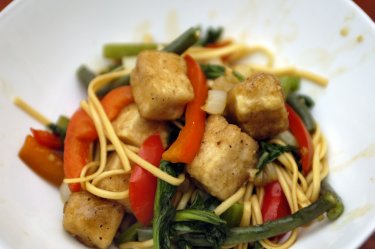
This stir-fry used the bok choy, tatsoi, and purple beans from this week's CSA. We didn't have enough of any of these vegetables to feed even one person, but combined all together (and with the addition of green and red bell pepper), it made a great meal.

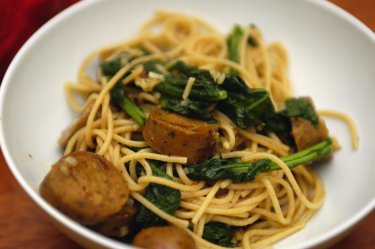
Whole wheat pasta with broccoli rabe and vegan sausages. I ate mine with a garlic olive oil sauce, Dewey had his with tomato sauce.

Tuesday, October 6, 2009

Salad


I've been trying to make an effort to eat more raw fruits and vegetables (and more fruits of any kind really). Whenever I get a perfect piece of produce, I thumb through all my cookbooks and scour the Internet for just the right recipe. But really, fruits and vegetables are pretty awesome all on their own. Sometimes, I forget that.

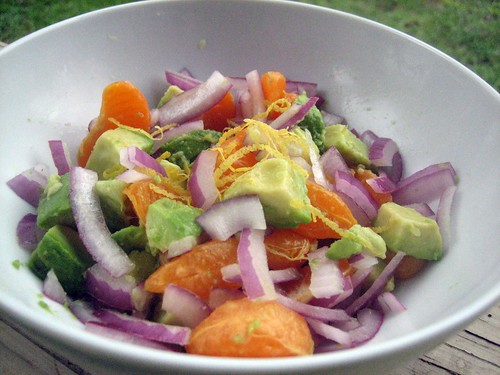
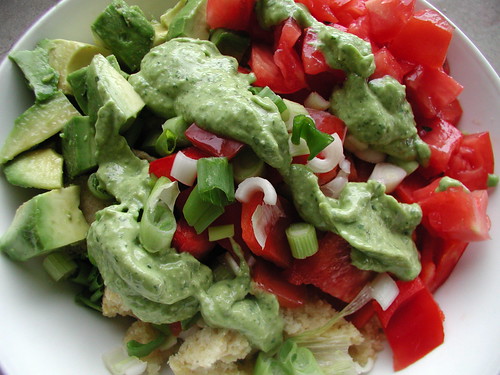
This salad is exactly what it looks like. Two mandarin oranges (so easy to peel and no seeds!), an avocado, 1/4 red onion, and lemon juice and zest. That's it.

Friday, July 10, 2009

Pizza


Turns out the second yeasted thing I made wasn't foccacia or challah but pizza. Dewey and I have been making our pizzas using dough balls from Whole Foods up until now. I think we'll be making all of our own pizza crusts from now on because this was one of the best pizzas I've ever had.

The crust recipe is from Vegan with a Vengeance as is the pizza sauce. The pizza dough recipe made enough dough for four 6- or 7-inch pizzas, so we froze half of it for another time. Making your own pizza sauce is incredibly easy, especially if you don't mind chunks of tomato or have an immersion blender. (We blend ours. Tomato chunks are on Dewey's avoid-list.)

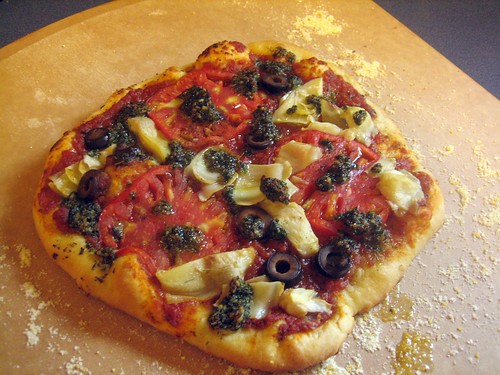
We each topped our own pizzas. I took this separate-but-equal food opportunity to eat lots of things Dewey won't touch. I topped my pizza with a thinly-sliced heirloom tomato, black olives, artichoke hearts, and pesto. Basil is the one thing I'm growing successfully in my garden.

Wednesday, April 1, 2009

Tex Mex leftovers


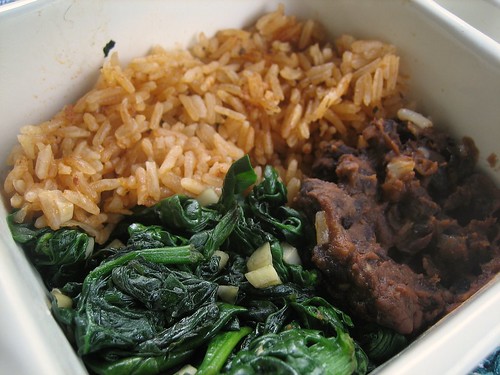
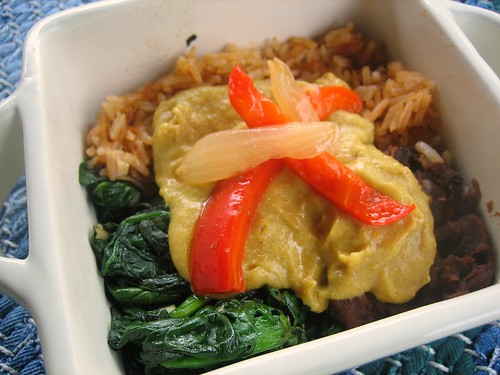
Dewey and I eat Tex Mex pretty often. And this is how the leftovers usually end up the next day. Last night, Dewey and I ate tacos with Spanish rice, black beans, red bell peppers, and onions. Today, I made a bowl full of Spanish rice, black beans, and wilted spinach with garlic.

Often, I'll make the rice for this by replacing some of the water with leftover salsa. (Sometimes I feel like Steve Martin in Father of the Bride running through the aisles of the grocery store, ripping packages of buns apart. Salsa and tortilla chips NEVER run out at the same time. I always have too much of one or the other.)

I topped the whole thing with Crystal's queso. This is THE vegan queso recipe. The recipe is offline temporarily because Crystal and her partner will be mass producing it for sale. Congratulations, guys!

Garden update: The kale was eaten by SOMETHING. It is no more. The carrots turned out the be grass. I planted tomatoes, and half of them have already succumbed to spider mites. Good thing I'm not counting on this garden to provide all my food.

Thursday, January 15, 2009

Taco Salad

In college every week, a lot of the Jewish students met up for a Shabbos lunch. Someone made this taco salad once, and for months after it showed up at every meal. There are so many variations though that no one ever got bored.

Taco Salad

lettuce
broken tortilla chips

toppings (choose several)
red, green, or yellow bell peppers, chopped
tomato, chopped (or canned in the winter)
corn (frozen is fine, it will thaw as you chop your vegetables)
peas (frozen is fine)
black beans
kidney beans
pinto beans
red onion, chopped
green onions, chopped
cilantro, chopped
pumpkin seeds
sunflower seeds
avocado, chopped
veggie pepperoni
veggie taco meat (the recipe from Yellow Rose Recipes is great)
other vegetables, to taste

dressing
salsa
vegenaise, or your favorite egg-free mayo

Tear your lettuce into salad-sized pieces. Don't worry about filling your salad bowl too full, the toppings will press the lettuce down some. Prepare all your toppings in bite-sized pieces. Be sure to choose a variety of colors. Spread your toppings on top of the lettuce, one topping at a time so you get a layered effect.

Prepare the dressing, mixing 4 parts salsa to one part vegenaise. (For a whole foods approach, just use plain salsa.) Just before serving, add the broken tortilla chip pieces to the salad. Don't add them too early or they'll get soggy. Serve the salad with the dressing on the side.

Saturday, August 2, 2008

Indian food

I used to be really intimidated by recipes for Indian food. They always had a mile long list of ingredients. Last year I took an Indian cooking class through the local university. Everyone in the class was intimidated by the instructor. "You didn't practice making all the recipes this week!" she would bark at people. "What could be more important than that?" The teacher didn't intimidate me though, and by the time the classes were over, Indian recipes didn't either. If you prep all your ingredients ahead of time and measure out your spices, all that's left is combining everything in the right order.

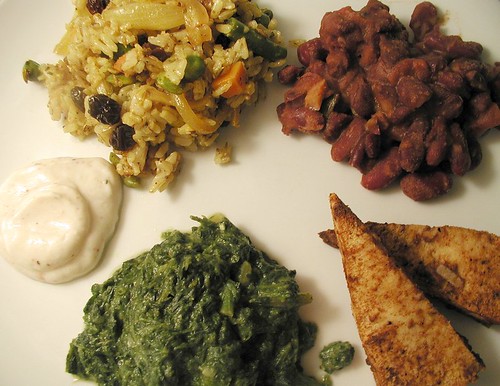
Going clockwise from the left, that's raita, pulau, rajma, tandoori tofu, and saag. And in English, that's spiced yogurt; rice with vegetables, fruit, and nuts; red beans; tofu baked with a spicy rub; and spinach.

Pulau, sometimes called pilaf, is really flexible. You have to have rice, but you can vary the vegetables, nuts, and dried fruit you use. Here's how I made it.

Pulau
4 cups cooked brown rice
2 tablespoons oil
1/2 onion, sliced
a cinnamon stick
a cardamom pod
2 cloves
1 clove garlic, minced
1 inch ginger, minced
1 teaspoon cayenne
bay leaf
salt
1 cup frozen mixed vegetables (carrots, peas, lima beans, corn, green beans)
1/4 cup raisins
2 tablespoons sunflower seeds
garam masala (optional)

Combine all the spices and set aside. Heat the oil in a frying pan on medium heat. Add the spices, garlic, and ginger and cook until fragrant, about 1 minute. Add the onion and cook for another three minutes or until the onion begins to look translucent. Add the vegetables and cook until warmed through. Add the raisins and sunflower seeds and cook another minute. Salt to taste. (You may want to remove the cinnamon stick, cardamom pod, and bay leaf now.)

Combine the vegetable mixture with the cooked rice. You can sprinkle everything with garam masala if you want.


Wednesday, July 23, 2008

Ratatouille


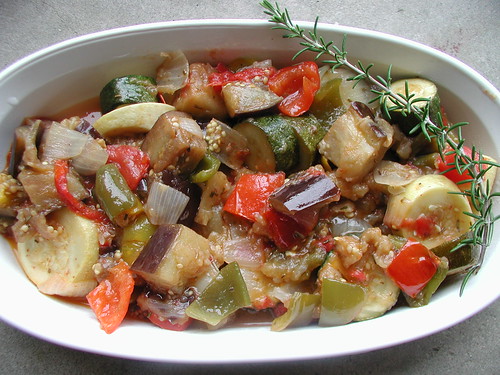
I once told my mom that she only made two vegetable dishes: stir fry and ratatouille. And the only difference between the two was that the ratatouille had tomatoes. My mom didn't find this funny.

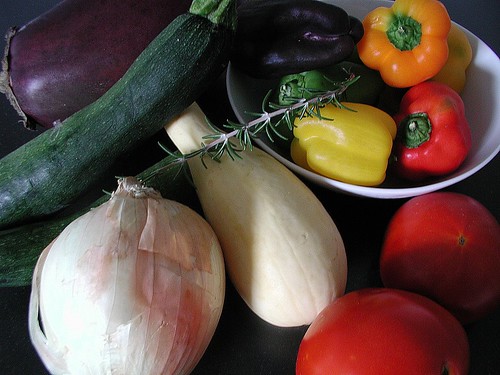
And of course, I've inherited a lot of my mother's cooking style. She may have been right about this one. (Don't tell her I said that though.) This family recipe is another one of those 'throw a bunch of things in a pot and let it cook' types. The beauty of this Mediterranean peasant dish is that all of the ingredients grow at the same time. All of the vegetables in this dish can be found in my parents' garden (probably why it showed up so often). As an apartment dweller, I don't yet have a garden, but I found all of these vegetables at my farmers market (and I snagged the rosemary from a bush outside the museum. Shhh!)


Ratatouille

1 onion, chopped
1 medium eggplant, chopped
3 summer squash, a mixture of zucchini and yellow squash, sliced into rounds
2 tomatoes, chopped
6 mini or 2 medium bell peppers, assorted colors, chopped
2-4 garlic cloves, smashed
1/2 cup olive oil
rosemary (and/or oregano, thyme, marjoram, chervil, or basil)

Combine all the ingredients in the largest pot or sauce pan that you have. Simmer uncovered (don't brown) on medium low for 45 minutes to an hour, until everything is soft. Stir occasionally. The eggplant will be the last to soften. By the time the eggplant is ready, the tomatoes and the onions will have almost disintegrated.

That's it! Use what vegetables you have on hand. My mom sometimes adds mushrooms.

Other eggplant recipes
Eggplant dip
Spicy eggplants

Tuesday, July 8, 2008

Cornbread salad

I was sick last week and then my boyfriend came for a visit, so my fridge is all out whack right now. Tonight's dinner mission: use up as much of the food as possible before it goes bad. There was half a pan of cornbread and my boyfriend bought me THREE avocados that were too hard to use until today, so this is what I came up with. Since I made this up by the fly of my pants, substitute away.

Cornbread salad with avocado-lime dressing
cornbread pieces, about two cups
tomato, chopped
1/2 red bell pepper, chopped
2 scallions, green and white parts, chopped
an avocado, chopped
juice from a lime
jalapeno, chopped
2 tablespoons chopped cilantro
salt
water

Mix together cornbread, tomatoes, bell pepper, scallions, and half the avocado. In a food processor, mix together the rest of the avocado, the lime juice, jalapeno, and cilantro. Thin the mixture with water until it's to your preference. I probably used two teaspoons water. Salt to taste. Dress the cornbread salad with the avocado-lime dressing.

Saturday, June 7, 2008

Vegetable pasta, two ways

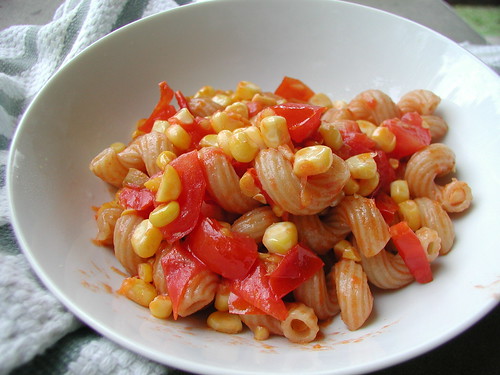
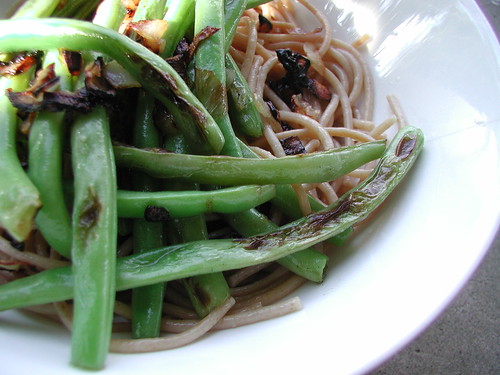
Looking over my posts, two things are pretty obvious. One, I eat 90 percent of my food out of bowls. And two, I like cooking techniques that let me throw things together without fussing too much about recipes and measuring. In honor of both of these things, I present you two vegetable pasta dishes that look and taste pretty different, but are prepared using the same method. And in a bowl.

Corn-Tomato Pasta

Green Beans and Caramelized Red Onions with Spaghetti

So here's the loose method.

Step 1. Boil pasta. You know how to boil pasta right? (Did I ever tell you about the time I tried to teach a roommate how to boil pasta?)

Step 2. In a frying pan, heat enough oil to coat the pan. I usually swig my bottle of oil around the pan twice. If you're a measure-er, this is probably about 2 tablespoons. If you're using onions or garlic, add those to the pan first. You want to give them enough time in the pan to mellow out so you don't get that sharp taste from either of them. When it's time to add your corn or green beans, turn the heat up. You want the outside of these vegetables to get crispy, even a little blackened. It adds flavor. You can test whether the vegetables are done by poking them. I suggest using a fork to poke. Fingers are too easily burned. The vegetable should give a little, but not too much. You can also try biting into a vegetable, but remember they're hot.

Step 3. Add the tomatoes to the saute pan last, if you're using any. They're going to release a lot of liquid, and this means that your other vegetables won't be frying so much as steaming. Cook the tomatoes until they start to fall apart. Depending on how small you chop them, this can take anywhere from 10 to 20 minutes. The juices from your tomatoes will mix in with the oil and create an orange-colored sauce. This is a good thing.

Step 4. Add the drained pasta to the vegetables and mix everything together well. You might want to add some olive oil for more flavor. You definitely want to add salt. Serve in a bowl.

Sunday, April 20, 2008

Passover Seder

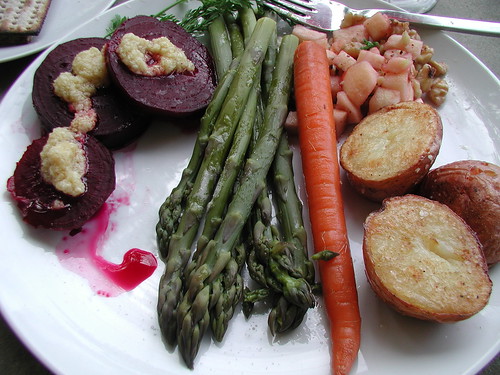
Passover is a meal of symbols. Each food eaten has a meaning. Before the meal, a service is read to explain the meaning of each food and to retell the story of the exodus from Egypt. (In fact, the word "seder" means order.) Here's my seder plate: beets with horseradish sauce, carrot tops, asparagus, a carrot, haroset (apple-walnut salad), and roast potatoes. At the top left of the photo you can just see my whole-wheat matzah peeking out.

The haroset represents the mortar used by Jewish slaves to piece together the bricks of the pyramids. Every Jewish family has a recipe for haroset. In Egypt, they use dates and raisins for the fruit. Persian recipes use pistachios and almonds. My family makes a pretty traditional Ashkenazik recipe.


Haroset

3 apples (I used gala, but anything sweet is good)
1/3 cup walnuts
1 tablespoon agave nectar or sugar
3 tablespoons sweet red wine
a sprinkle of cinnamon

Peel the apples and cut them into small chunks. Crumble the walnuts into the apples. Add the agave, wine, and cinnamon. Mix everything together and refrigerate until ready. Haroset is one of those foods that gets better with time. The wine soaks into the apples and turns them a rosy red.

Saturday, March 29, 2008

A colorful dinner


This was a pantry dinner from a bit ago. Red cabbage slaw, broccoli rice casserole, and BBQ chickpeas. The chickpeas and the broccoli rice casserole are "throw a bunch of stuff in a pan and bake" dishes, so this is an easy weeknight dinner. I adapted the BBQ chickpea recipe from The Compassionate Cook. It's basically all the ingredients for barbecue sauce cooked with chickpeas. I changed the recipe to include my favorite barbecue sauce ingredients. It's pretty flexible, so feel free to play around with it.

BBQ Chickpeas

2 16-oz can chickpeas, rinsed (about 3 1/2 cups)
1 16-oz can tomato sauce (or chopped tomatoes) (about 2 cups)
1/3 cup molasses (or brown sugar)
1/4 cup finely chopped onion
2 tablespoons mustard
1 tablespoon vinegar
a pinch of hot pepper flakes
black pepper

Combine all ingredients in a casserole dish and mix well. Cover and bake at 350 F for an hour or until the sauce slightly thickens.