Showing posts with label Bittman. Show all posts

Wednesday, December 23, 2009

CSA and Moving Update

Saturday morning, we picked up our CSA veggies. Look! Potatoes! And green onions!

Itty bitty thinned carrots! And carrot tops, which I use like parsley.


And turnips! Er, turnips. What do you do with turnips? (To start with, you refrigerate them. I learned the hard way.)


I thumbed through my eleventy-billion cookbooks and finally settled on Turnips in Mustard Sauce from How to Cook Everything Vegetarian. This cookbook is great for "what am I going to do with this?" cooking. And it didn't let me down.

I don't like to post recipes from cookbooks unless I change them significantly, but let's take a look at braising. Braising is great for root vegetables. Carrots, potatoes, beets, even radishes, are great braised. So no surprise that it worked well for turnips.

To braise, cut the vegetables into equal sized pieces so it cooks evenly. This can be hard with something knobby, but braising isn't about perfection. Brown the vegetables in a bit of oil. Sprinkle with some good old salt and pepper. Then add about a cup of flavorful liquid (I used vegetable broth this time, but wine works great, too) and simmer covered until the food is tender.

And here is the beauty of braising. After the food is cooked through, remove it to a bowl and leave the drippings in the pan. This is where the magic happens. Add a bit of starch to thicken (the recipe called for cornstarch, but the only starch I had was mystery bulk bin flour. Possibly spelt flour. Or maybe whole wheat pastry flour.) It doesn't really matter what starch you use, what does matter is that you mix it with a bit of liquid before adding it to the pan. This will prevent dreadful clumps from ruining your sauce. Add any seasonings you like (like mustard!), and cook until reduced to a thickish sauce.

Drizzle your pan sauce over the braised vegetables and sprinkle on whatever herbs you have on hand. Braises aren't always pretty, but a sprinkle of herbs will cleverly disguise this. (Jazz hands!) I used carrot tops. Because it's all I had.

We just moved into a new house, and the kitchen is the only room we haven't unpacked yet. Which is why I cobbled lunch together from some soggy unrefrigerated turnips, carrot tops, and mystery flour. But it was a tasty cobble, so don't hold it against the turnips.

Saturday, July 4, 2009

Bagels!

Recently, my grandmother bought Dewey and me a stand mixer (thanks Barbie!). One of my goals this year is to get more comfortable working with yeast. I've made bagels and pretzels a few times before, but I'm not very confident doing it. So Dewey and I knew exactly what we wanted to make first with the stand mixer's dough hook.


These are some bagels we made earlier this year with the recipe from How to Cook Everything by Mark Bittman. This is the first time that cookbook has let me down. The instructions were both too complicated and not detailed enough. They suggested spritzing the oven with water to create steam, but failed to mention that the
water mixed with the yeast should be warm. They turned out too tough and unusually brown.


But with our new mixer in hand, we tried the recipe from Vegan Brunch by Isa Chandra Moskowitz. And this recipe turned out perfect for us. Crisp on the outside and chewy on the inside. And they're nicely browned (but not brown), too. Just perfect.

And this recipe has fewer steps as well. Only one rise instead of two. No fussy water in the oven. And Isa's instructions for shaping the bagels worked out much better for us.

Now I'm excited to try more yeast recipes. I think focaccia is next on my list.

Thursday, May 29, 2008

You made what?

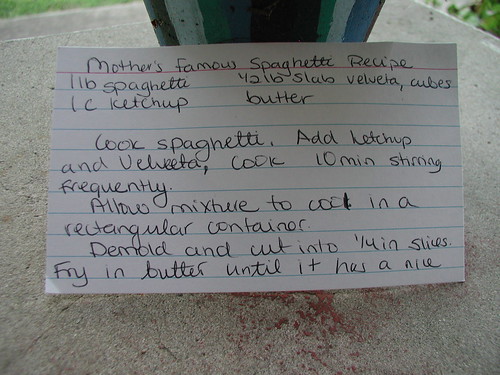
I love to thumb through cookbooks. If you invite me over to your house, I'll probably take a peek at what's on your cookbook shelf. And sometimes, the odder the recipe the better. I found the above recipe in an old community cookbook. In case you can't read the recipe card, the ingredients are a pound of spaghetti, half a slab of velveeta, a cup of ketchup, and butter (the butter is for frying of course). The recipe is called "Mother's Famous Spaghetti Recipe". I copied this recipe back in the days when I didn't give a second thought to eating food products like velveeta. But even then, this was never a recipe to make. I copied the recipe down onto an index card just so I can stare at it every once in a while. Someone once thought, "You know what would make an awesome spaghetti sauce? Ketchup and velveeta. Ooo, and when it cools down, I can fry slabs of it in butter!" Genius.

I still sometimes see a recipe and think, that's so weird. I have to make it. When I first got How to Cook Everything Vegetarian I found a few recipe ideas that fascinated me, including this recipe for seaweed mayo. That's right. Mark Bittman wants you to blend seaweed with olive oil in your food processor and then eat it as a spread on a sandwich. I couldn't resist.


And actually, it's pretty good. Surprisingly good. It looks almost like a pesto. And it doesn't taste like a catfish pond, which is what I expected. The fishy flavor is mild, and there's a bit of rice vinegar in there for tang. This is the kind of thing that you eat spread on a sandwich and think, what IS that. Taking one bite after another until it's all gone and you still don't know what you ate. I'll definitely be making this again.

Wednesday, May 21, 2008

More food in a bowl

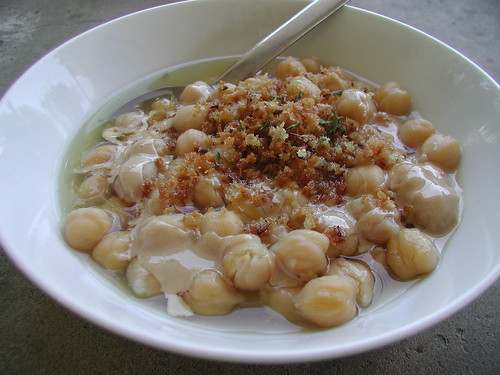
Chickpeas in their own broth

I finally got it together this weekend to cook up a pot of beans. Once a month or so, I like to cook a pound or two of beans. I use some up right away, and the rest goes into the freezer. The bean of the month for May is the chickpea. Chickpeas are one of the longer cooking beans, taking up to three hours to soften. Fortunately, I was so together this weekend I even managed to soak the beans overnight. Soaking isn't absolutely necessary to cook beans, but it dramatically reduces the cooking time. After soaking for ten hours (I had a good long sleep), my chickpeas cooked up in just over an hour.

While the beans cooked, I came up with a list of ideas for what to do with them. I'm just about out of tahini, so hummus was out of the question. Chickpea cutlets, warm chickpea salad, roasted chickpeas, saffron rice with chickpeas, and the simple dish above all made the list.

Chickpeas in their own broth is another Bittman inspired dish. He raves about the flavor of chickpea broth, and I have to agree with him. I'm never pouring this stuff down the sink again. The chickpeas are spooned into a dish with their liquid, and then drizzled with lemon juice and tahini and sprinkled with spiced toasted bread crumbs. I love dishes like these because they're practically recipe-less.


Tuesday, April 8, 2008

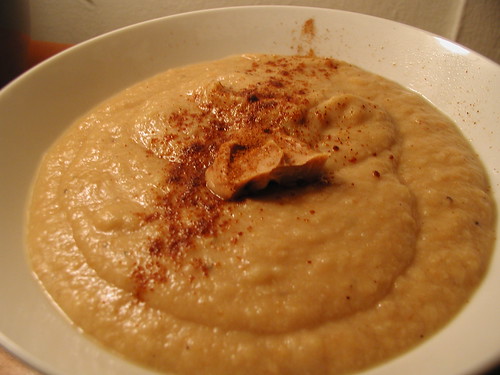
Peanut Cauliflower Soup

This soup was a Friday night soup. Saturday is my day for grocery shopping, so that makes Friday my day to use up odds and ends in the fridge. One Friday, I had celery, carrots, part of an onion, and half a head of cauliflower to use up. The celery and carrots weren't good enough to be eaten raw, so soup it was. I remembered seeing a recipe for Virginian Peanut Soup in Bittman's How to Cook Everything Vegetarian. The soup called for potatoes. Pureed potatoes make for a pretty creamy soup. People make mashed cauliflower in place of mashed potatoes all the time. So I figured why not?

Peanut Cauliflower Soup
oil for sauteeing
half an onion, minced
2 celery stalks, chopped
2 carrots, chopped
1 cup cauliflower, chopped
salt and pepper
2 bay leaves
enough vegetable broth (or water) to cover
1 cup of soymilk (optional)
1/2 to 3/4 cup peanut butter
cayenne pepper

Sautee the onions until soft (about 3 minutes). Add the celery and carrots and cook another 3 minutes. Add the cauliflower, bay leaves, and enough broth or water to cover everything. Bring to a boil and simmer covered for 30 minutes. Remove the bay leaves and discard. Puree the soup with a hand blender (or in batches in a regular blender). Stir in peanut butter and soy milk and season to taste with salt, pepper, and cayenne. Warm the soup on the stove without letting it boil. Serve with a dollop of peanut butter and a sprinkle of cayenne.

Wednesday, November 28, 2007

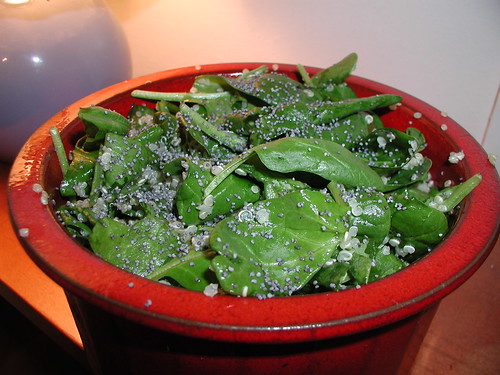
Quinoa Salad with Spinach, Lemon, and Poppyseeds


First of all, thanks E's parents for sending me the camera! Second, Mark Bittman has a new vegetarian cookbook. This can't be good for my obsession. Expect lots of new recipes from How to Cook Everything Vegetarian. Here's one to start out. The recipe says that it's "Quinoa Salad with Spinach, Lemon, and Poppyseeds." Already you can see one problem. This is a spinach salad with quinoa, not the other way around. But it was still good. What you can't see in the photo is that there are lemon segments in the salad. Or at least small pieces of lemon. It turns out that peeling a lemon is really hard to do. So I ended up cutting off the peel. The whole time I was doing it, I kept imagining me slicing my hand open and all the lemon juice stinging to high hell. But I actually didn't cut myself. Next time I make this, it will probably be "Spinach Salad with Quinoa, Satsuma, and Poppyseed." Satsuma's are really easy to peel, and I can probably just steal them from a neighbor's tree.

Friday, June 1, 2007

Loquats and More on Polenta

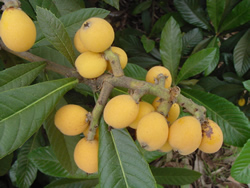
A few months ago, I spotted little yellow fruit growing on the tree in my yard. Since I'm not from Louisiana I had assumed that all trees with big, shiny green leaves were magnolias. Whoops. My landlord told me that it was a Japanese plum tree and that the fruit was edible. But what was I going to do with all that fruit? Some of it disappeared all on its own. The birds got a lot of it. And the neighborhood kids got a big chunk, too. I would come home from a walk to the library and see kids piling fruit into their doubled up shirts. When they saw me, they started running. I tried yelling, "Please! Steal my fruit!" but for some reason, that didn't work. One Saturday morning, the Jehovah's Witnesses showed up, and I convinced them to take some fruit. I even brought some to a party, but they weren't a great hit. There are between one and five seeds in each small fruit so it's a lot of work to eat. After all this, I was still left with a lot of Japanese plums. So I did what I always do when I have a dilemma. I turned to Google.

I found out that my Japanese plums were actually loquats. And loquats aren't the same as kumquats. I wonder if there's other "quat" fruit out there? I could only find one recipe for loquats on all of the Internet. And so I made it. My mom says this is the best thing I've ever cooked. But she's a ginger addict. If I added ginger to saw dust, she might say the same thing.

Loquat Chutney
10 lbs loquats (about a gallon)
3 1/2 c brown sugar
2 c white vinegar
2 T grated citrus peel (I used the peel from my loquats. I wasn't entirely sure if it was edible, but I haven't died yet)
2 T minced ginger (I didn't bother to peel it)

Remove the skins and seeds from the loquats. This will take a very long time, about 3 CDs of Harry Potter and the Chamber of Secrets. Throw everything together in a pot and boil until it thickens. The original recipe said to boil for 45 mins. I think I boiled longer because it never seemed to thicken. But after it cooled, it got really thick. Whoops. Instead of 10 cups of chutney, I ended up with 3-4 cups of jam. It still tastes great spread on a toasted English muffin or a crumpet.

In polenta news, I keep making that recipe over and over again. It's a great thing to make when there's nothing in the cupboard. I haven't tried to broil it yet because I keep eating it all when it's soft. Here's the recipe I use. It's from the Bittman book I keep complimenting. Really, you should buy it.

Polenta
3 1/2-5 c water (more for soft polenta, less for thick)
1 cup cornmeal (I get mine at the farmers' market. I'm sure there are all kinds of snobby standards about what sort of cornmeal to use. I say ignore 'em.)
salt and pepper

As you can see, there aren't a lot of ingredients. Bring the water to boil over medium heat. Slowly whisk in the corn meal a little bit at a time. Once all the cornmeal is incorporated, turn the heat to low. Whisk every once in a while to keep lumps from forming. After about five minutes, switch to a wooden spoon. Stir almost constantly until the polenta is done which can be anywhere from 15 to 45 minutes depending on how thick you want it. Season to taste.

I usually use less water and cook for less time because I'm impatient. I like to add a little butter or olive oil along with my seasonings at the end, too.

Someday, I'll have to try cooling and slicing the polenta. If any of y'all ever get around to doing that, let me know how it goes.

Tuesday, April 24, 2007

Polenta, finally!

About a year ago, E and I met up with some friends in Houston. We all got dressed up and made a nice Italian dinner, spaghetti with mushroom tomato sauce, salad, and polenta. Except the polenta gave us trouble. Or maybe we gave it trouble. One way or another, E and I found ourselves eating bits of gloppy polenta from the pan at 11PM in our pajamas. We were not impressed. Food that takes over five hours to prepare should taste better than that.

I braved the stone-ground cornmeal a few weeks ago and gave polenta another try. Wow was it good. I think E and I used too much liquid. And we stirred too much. Polenta is one of those foods that people are always warning you to stir often (and only clockwise!) The recipe I followed (from the Bittman of course) said to whisk the cornmeal into the water in small batches. And then don't worry about stirring much until it starts to thicken. Not only was this easier (I did some dishes while I waited), but it tasted great. I can't really attest to how well it thickened because I ate most of it hot from the stove. It reminded me of the taste of toast and eggs. I have no idea...

P.S. E has photos of the two of us making sushi including a shot of the world's largest avocado. Bug her to post them!

Sunday, March 18, 2007

Aromatic Tomato Sauce and Sesame Asparagus

This is actually the third Bittman sauce that I've made. The one I didn't blog about is the butter variation. That variation was butter instead of olive oil. It was good, but not all that different from the basic. And I didn't make all the mistakes I made in the first one. This time, I used a smaller pan, so there wasn't any burning. And I cut the tomatoes with my kitchen scissors instead of squishing them with my hand. Squishing is more fun, but cutting means less tomato juice splattered all over my kitchen.

Anyway, Aromatic Tomato Sauce. This version has equal parts carrots, celery, and onion added to the tomato sauce. I'm not crazy about it. It's pinkish instead of red. And it just doesn't taste saucy to me. I guess it would be a good way to trick a kid into eating veggies. But I don't have any problems eating vegetables. Ooo, important part. I got to use my hand blender for this! I love my hand blender. Who stirs when you can blend? But it still wasn't saucy enough. It was. . . gritty? course? I want a smooth sauce. I'm still waiting to find the perfect one.

The Sesame Asparagus was amazing. This is a recipe La and I made in college. We both had a huge stack of asparagus recipes we wanted to try. We'd wait all year until asparagus was affordable, and then we'd gorge. Well, this week asparagus was $1.50/lb. Yay! So, Sesame Asparagus is steamed asparagus, cooled, with a sauce of sesame oil, white wine vinegar, soy sauce, and sugar. All sprinkled with toasted sesame seeds. Except this time I used rice vinegar and I added edamame. It was so good. I'm looking forward to leftovers.

Friday, February 23, 2007

Mark Bittman's Basic Tomato Sauce, Mustard Greens with Lemon Juice, and a Cutie

I finally located my camera! But not in time to charge it before dinner finished cooking.

I want to make all the vegetarian pasta dishes from Mark Bittman's How to Cook Everything. There are something like 38 pasta recipes, not including the Asian dishes. Here's the first. Basic Tomato Sauce really is basic. Open can of skinned, whole plum tomatoes. Cook until saucy. More or less, that's it. Except, mine was threatening to burn. And it took much too long to get saucy. I'll have 5 or 6 more times to get this right though because there are variations.

On the side, I wilted some mustard greens in a little oil and then sprinkled with salt and fresh lemon juice. I even garnished with some lemon peel. It looks real pretty. Too bad you can't see it.

And finally, a cutie. No, not me. It's some kind of citrus fruit. Like a satsuma or a tangerine.